 Start Your Retirement Roadmap
Legacy · The After-You Question
More than a will: instructions your family can actually follow.
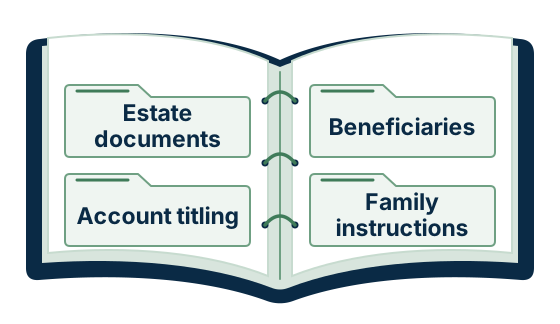
Legacy planning is the work of making sure everything you own transfers to the people and causes you choose, with the least confusion, cost, and delay possible. It coordinates your beneficiary designations, account titling, estate documents, and family instructions into one picture, because a will alone doesn't control most of what you own. Retirement accounts, life insurance, and jointly titled property pass by beneficiary designation and titling, not by your will.
Here's the uncomfortable part: you can have a perfectly drafted will and still leave your family a mess. An outdated beneficiary form from a job you left in 2004 can override everything your attorney wrote. This page walks you through what legacy planning covers, how to spot the gaps in yours, and where to start.
Nobody enjoys thinking about this. That's exactly why it's the area with the most unfinished business.
Your will says one thing. Your 401(k) beneficiary form, filled out 20 years ago, says another. When they disagree, the beneficiary form usually wins, and no attorney's letterhead changes that. Most people have never checked whether their documents and designations tell the same story.
Accounts, passwords, policies, deeds, the key to the safe deposit box, the name of the person to call. If that map lives only in your head, your family inherits a research project on the worst week of their lives. Organization is half of legacy planning, and it's the half most plans skip.
Legacy planning isn't only about death. If a stroke or dementia took your voice tomorrow, who could pay your bills, talk to your doctors, and manage your accounts? Without the right documents in place ahead of time, your family may need a court's permission to help you.
Unequal gifts nobody explained. A house three siblings inherit together. A second marriage with children on both sides. Money rarely splits families; ambiguity does. Clear instructions, made while you're here to explain them, are one of the kindest things you can leave.
Legacy is one of the five planning areas, and it decides what actually reaches the people you love. The work sorts into three moves: get the documents right, move wealth on your terms, and leave clear instructions.
01 · DOCUMENTS
Your beneficiary forms and titling decide more than your will does. We make them agree.
02 · TRANSFER
How and when wealth moves can change what your family actually keeps.
03 · PEOPLE
The best plans hand your family clear instructions, not a pile of guesses.
One document that shows what you own, how each piece transfers, who's responsible for what, and exactly what your family would do first.
Book a Call
Your legacy plan inherits every decision the other four planning areas made. That's why we don't treat legacy as a document-signing errand. It's one area of a coordinated system: five planning areas, one plan.
This is for educational purposes only and not specific tax or legal advice. Consult your tax advisor and attorney.
FAQ
Usually not, and that's not a sales line. Your will only controls assets that pass through probate. Retirement accounts, life insurance, and anything with a beneficiary designation or joint title pass outside your will entirely. If those designations are outdated or missing, they can override your will's instructions. A complete legacy plan checks all of it, and that's exactly what we build together in the Retire on Purpose Roadmap.
No. We're a financial planning firm, not a law firm, and we don't practice law. Our job is the coordination attorneys usually don't do: reviewing your beneficiaries and titling, flagging what's missing, organizing everything so it's findable, and working alongside your attorney so the legal documents and the financial accounts agree with each other.
It depends on what they inherit and how. Most inheritances aren't subject to federal estate tax at today's exemption levels, but inherited retirement accounts generally come with income taxes and required withdrawal timelines for your heirs. Which accounts you leave to whom, and which you spend during your lifetime, can meaningfully change what your family keeps. That's a planning decision, not a paperwork decision.
Before anyone needs it, which means now. Beneficiary reviews and family instructions cost you an afternoon while you're healthy. They cost your family months, legal fees, and stress if the first time anyone looks is after something happens. It's also easier emotionally than most people expect: it's a project about the people you love, not about dying.