 Start Your Retirement Roadmap
Investment · The Risk Question
Your portfolio's job changes in retirement: from growing a pile to funding a life.
Investment management in retirement means aligning your portfolio with the income your plan needs, the timeline you're on, and the amount of risk you can actually afford, not the amount you could stomach at 45. It covers your allocation, diversification, fees, taxes, liquidity, and how a market drop at the wrong moment would hit your plan. The goal isn't beating the market. It's making sure your money can do its one real job: fund the retirement you designed.
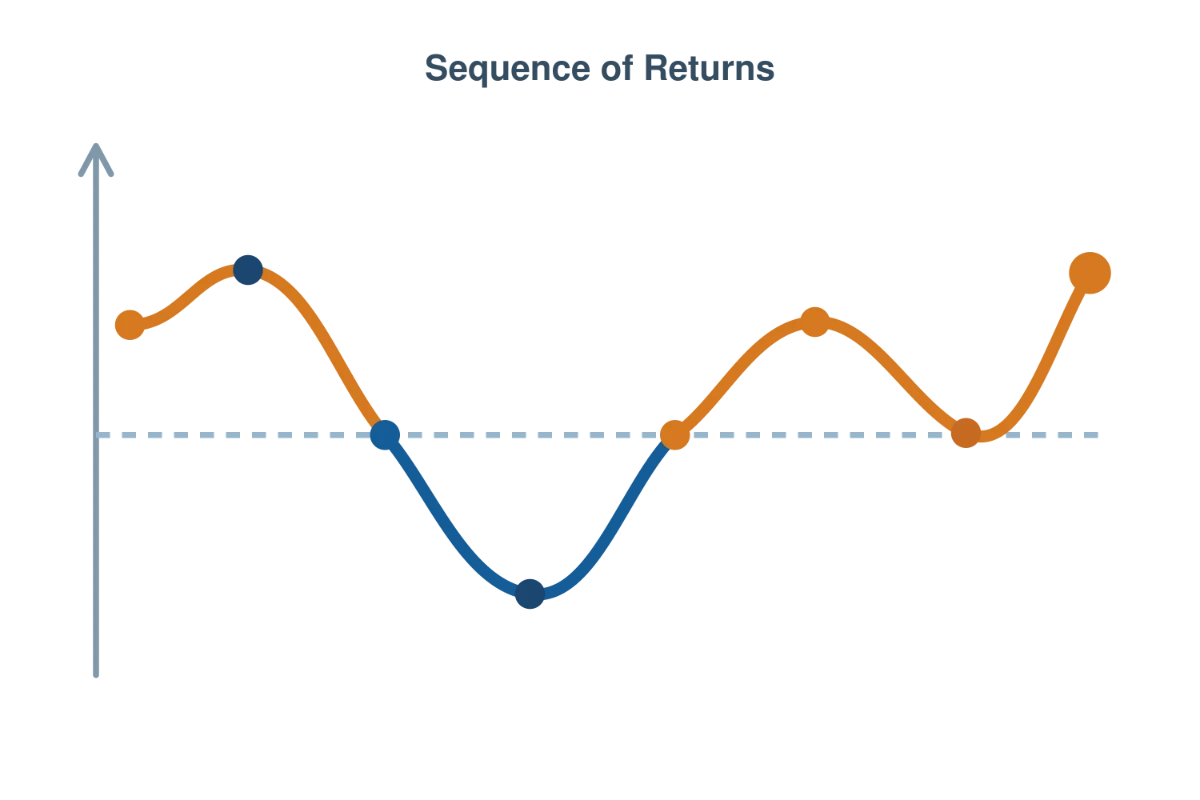
Here's the part most people miss: the rules change on the way down. While you're saving, a market drop is a buying opportunity. Once you're withdrawing, that same drop, if it lands in your first few retirement years, can do damage your portfolio never recovers from. That's called sequence-of-returns risk, and it's the reason a portfolio that served you well at 50 can quietly work against you at 65.
If any of these sound like your situation, this is the conversation to have.
A 30% decline in year two of retirement isn't the same as a 30% decline in year twenty. When you're withdrawing during a downturn, you sell more shares to raise the same income, and those shares never come back. We plan for that scenario before it happens, not after.
Most people can't answer this, because nobody's ever measured it against their actual income needs. Too much risk threatens your lifestyle. Too little risk can mean running short in your 80s. The right answer comes from your plan, not from a gut feeling or a birthday-based formula.
Layered fund expenses, trading costs, and advisory fees can quietly take a meaningful bite out of a portfolio over a 25-year retirement. We put every cost on one page so you can see exactly what you pay and decide whether it's earning its keep.
A 401(k) from one job, an IRA from another, a brokerage account, some old stock. Each piece might be fine on its own, but together they can overlap, fight each other, or leave gaps. We pull it all into one coordinated system with one job description.
Investment is one of the five planning areas, and in retirement it has a different job than it did while you were saving. The work sorts into three moves: build the portfolio around your plan, position it for retirement's risks, and keep it on course.
01 · BUILD
We start from your risk tolerance and your income needs, not an off-the-shelf model portfolio.
02 · POSITION
Retirement adds risks that accumulation never had. We build for them on purpose.
03 · MAINTAIN
A portfolio drifts. Rebalancing, fee checks, and reviews keep it aligned with the plan.
Every engagement in this planning area produces a written Retirement Investment Strategy: your target allocation, your risk parameters, your rebalancing rules, your fee summary, and how it all connects to your income plan. It's one of the five outputs of the Retire on Purpose Roadmap, and it's yours in writing.
Book a Call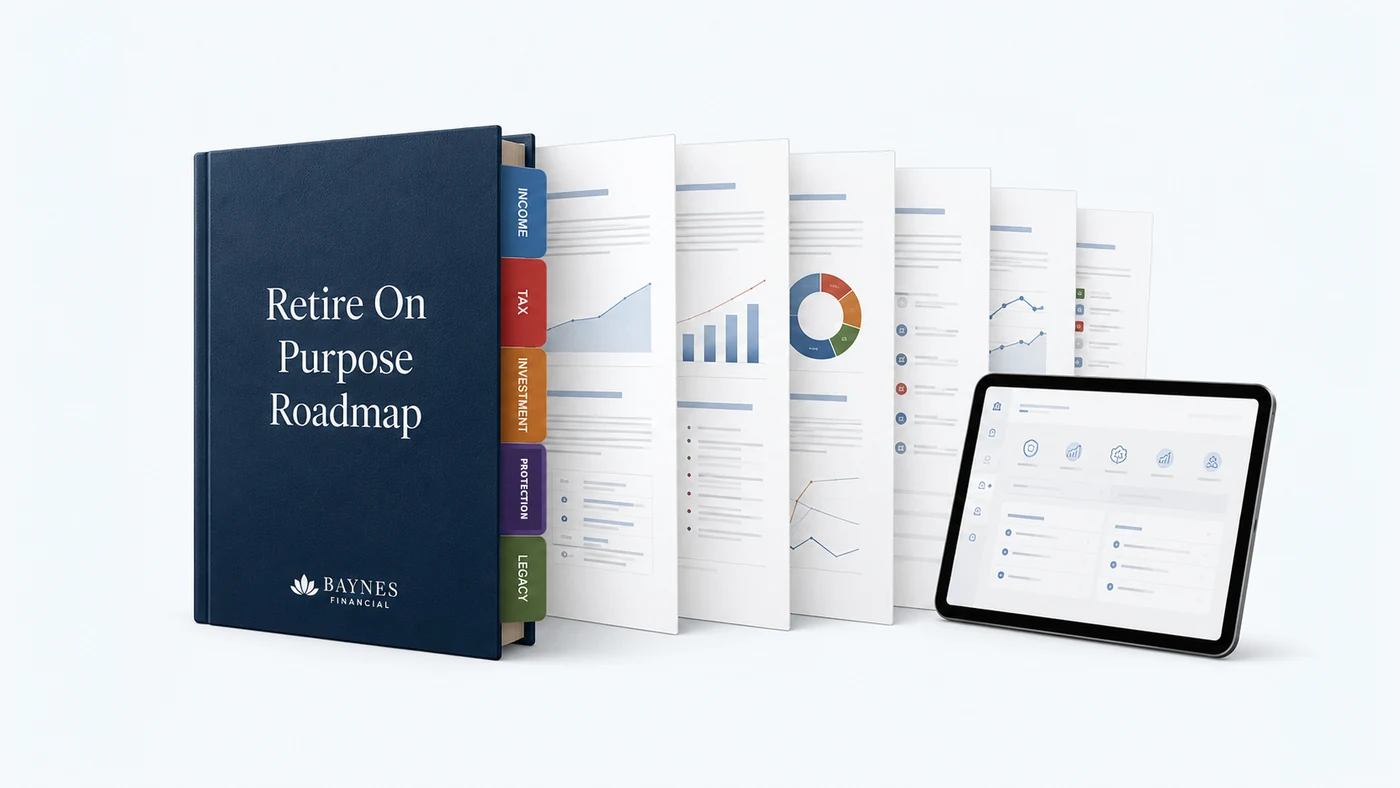
Investment Management is one of the five planning areas of the Retire on Purpose Roadmap, and it touches every other one. Change your portfolio and you change your whole plan, which is why we never manage money in a vacuum, and why we don't sell investment management as a standalone product.
This is for educational purposes only and not specific tax or legal advice. Consult your tax advisor and attorney.
FAQ
The rules change on the way down. While you're saving, time and new contributions can repair almost any market drop. Once you're withdrawing, a drop early in retirement forces you to sell more shares to raise the same income, and that damage compounds. Retirement investing shifts the priority from maximum growth to reliable income with enough growth to last, and it adds new work: withdrawal sequencing, liquidity reserves, and sequence-risk planning.
Most of our clients are between 50 and 70 with $250,000 to $5 million in investable assets. If you're not sure you fit, the ~20-minute Introductory Call is the easiest way to find out. We'll tell you honestly, and if we're not the right fit, we'll point you somewhere useful.
That depends on your plan and your preference, and it's a decision we make together, not a condition of working with us. Some clients consolidate accounts for simplicity and coordination; others keep certain accounts in place, like a 401(k) with an employer match. Either way, your Retirement Investment Strategy covers everything you own, wherever it lives.
No one can prevent a market decline, and you should walk away from anyone who says they can. What we can do is structure your portfolio so a decline doesn't force bad decisions: a liquidity reserve so you're not selling at the bottom, an allocation matched to when you'll actually need each dollar, and a written plan you made in calm weather so you're not improvising in a storm.